When You Need a Sleep Study
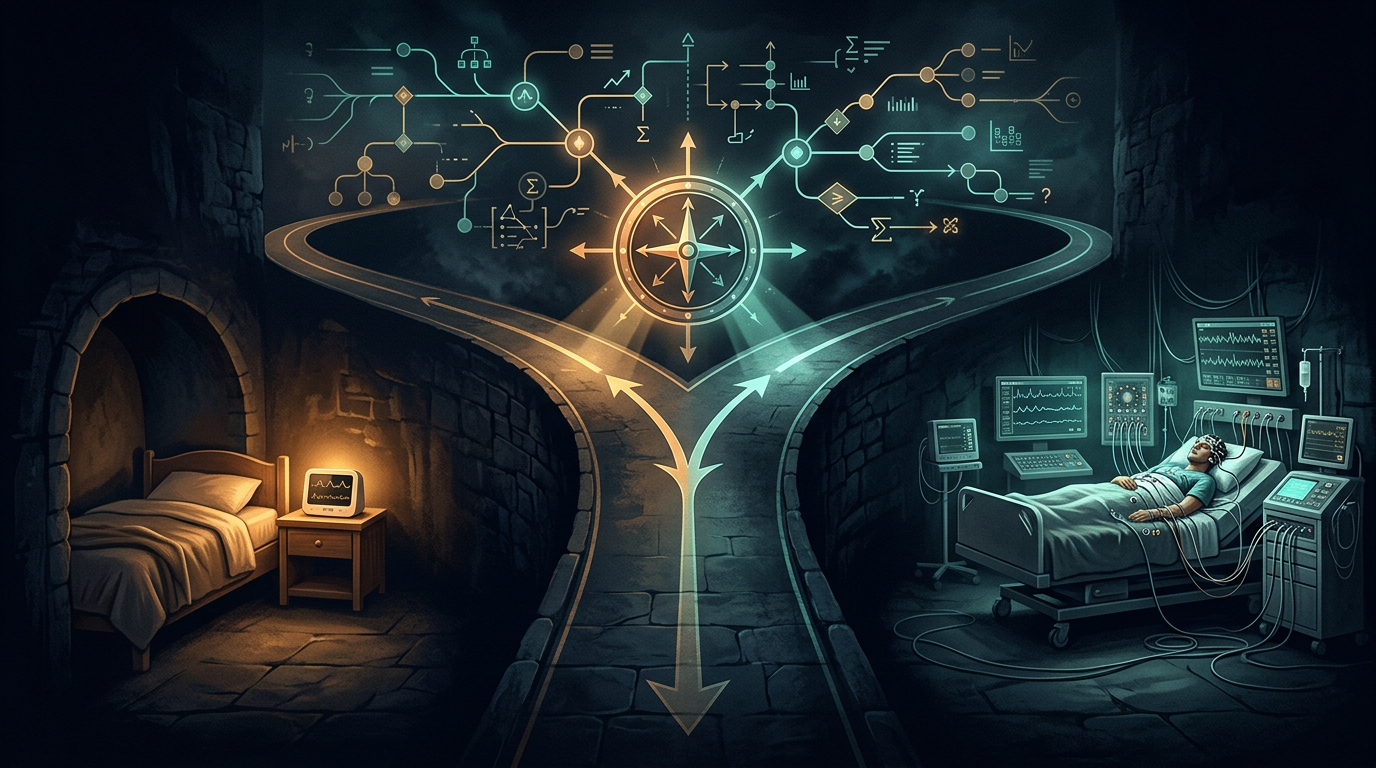
A sleep study is not a gold star for "caring about sleep." It is a diagnostic tool, and the right study depends on the problem in front of you. Not every sleep problem needs a study, but when the clues are strong—like gasping, snoring, or acting out dreams—the right test can be the turning point for your health.
There are two main ways we study sleep: 1. Home Testing (HSAT): You wear a small device at home for one night. It’s primarily designed to find obstructive sleep apnea in people who have clear symptoms. It’s convenient but less detailed. 2. Lab Testing (Polysomnogram): You spend the night in a sleep center with sensors that track your brain waves, heart rate, oxygen, and movements. This is the "gold standard" and is used for complex cases, movement disorders, or if we suspect more than one issue.
You probably need a study if you snore loudly, stop breathing at night, have unexplained daytime sleepiness, or engage in violent dream enactment. You probably don't need one for straightforward insomnia where there are no signs of a physical breathing or movement problem.
Clinical decision-making for sleep studies must be targeted and question-driven.
Diagnostic Modalities
- Home Sleep Apnea Testing (HSAT): Measures respiratory effort, airflow, and oxygen saturation. While cost-effective, HSAT is prone to underestimating OSA severity because it cannot distinguish between "wake" and "sleep" (the denominator for AHI). A "negative" HSAT in a symptomatic patient often necessitates a follow-up PSG.
- In-Lab Polysomnography (PSG): The comprehensive physiologic study. Required for diagnosing central apnea, parasomnias (like RBD), periodic limb movement disorder (PLMD), and for patients with significant comorbid medical conditions (HF, neuromuscular disease).
- SDB Suspicion: Symptoms of snoring, gasping, or witnessed apneas.
- Central Hypersomnolence: MSLT (daytime naps) requires an preceding PSG to rule out SDB and PLMD as causes for daytime sleepiness.
- Parasomnias: Specifically to rule out nocturnal seizures or to document REM sleep without atonia in RBD.
- Titration: Manual PAP titration is often superior to auto-titration in patients with complex respiratory patterns or significant mouth leak.