Sleep Performance Anxiety and Paradoxical Intention
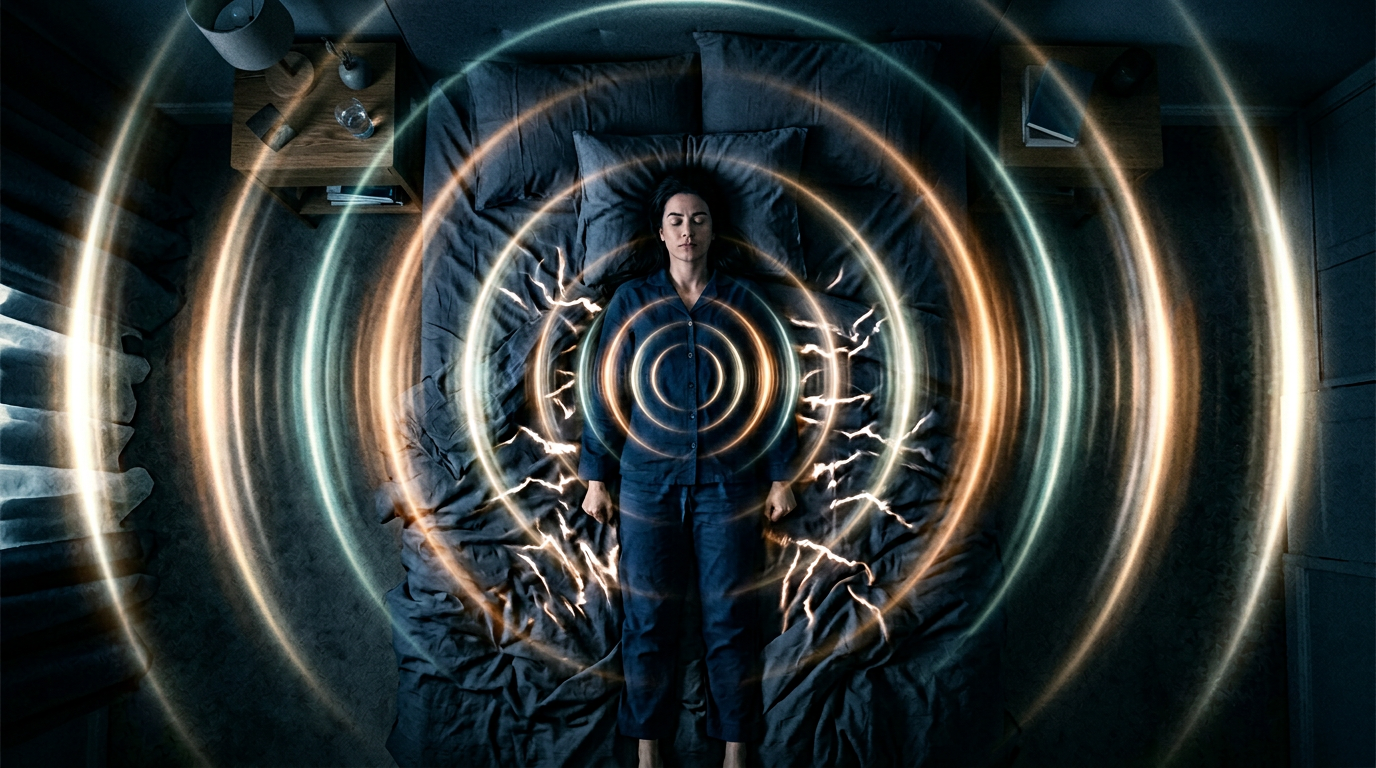
Sleep is the only thing in life where trying harder makes you fail faster. The moment you start treating sleep like a "performance" or a "deadline," you trigger your brain's alert system, which is the biological opposite of sleep. To get your sleep back, you have to learn the strange art of "passive surrender."
Have you ever been exhausted all day, but as soon as your head hits the pillow, your brain wide awake and thinking, "I HAVE to sleep now"? That is Sleep Performance Anxiety. You've turned sleep into a high-stakes test, and your body is reacting with a "fight or flight" response.
One of the most effective (and weirdest) ways to break this is a technique called Paradoxical Intention. Instead of trying to force yourself to fall asleep, you give yourself the goal of staying awake. You lie in bed, eyes open in the dark, and simply try to stay awake for as long as possible without getting out of bed. By removing the pressure to "perform" sleep, you lower your anxiety level, which ironically allows sleep to happen naturally.
Sleep Performance Anxiety is a hallmark of Psychophysiologic Insomnia, driven by the catastrophic appraisal of wakefulness and the subsequent activation of the sympathetic nervous system.