Caffeine and Sleep: A Practical Guide to Tapering
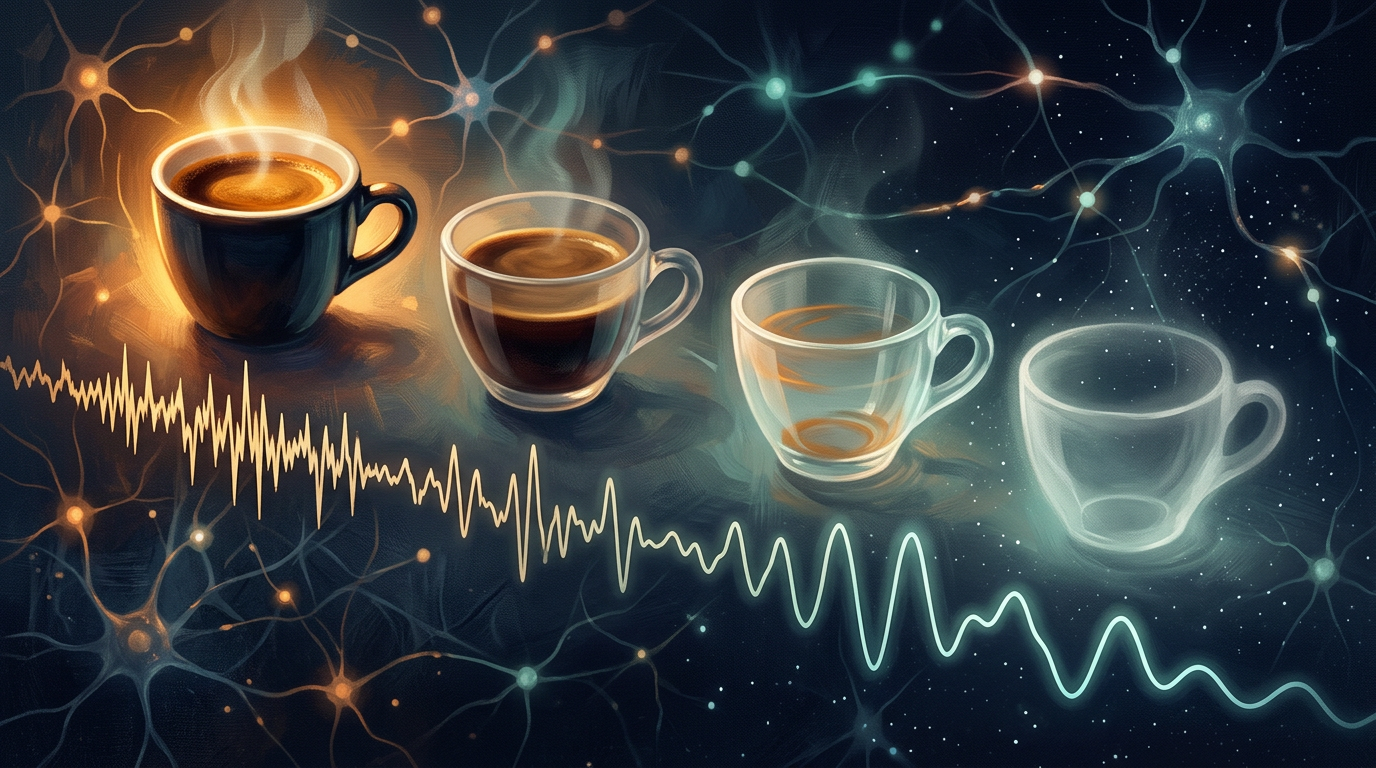
Caffeine is the world’s most popular drug, but for people with insomnia, it is often a "debt" that is never fully paid off. Because caffeine blocks the brain's ability to feel sleep pressure, it doesn't actually give you energy—it just hides your exhaustion while pushing your bedtime later and later. If you want to fix your sleep, you have to negotiate with your coffee.
Caffeine works by blocking a chemical in your brain called Adenosine. Adenosine is what builds up throughout the day to make you feel sleepy (your "sleep drive"). When you drink caffeine, your brain can't "see" that adenosine, so you stay alert.
The problem is that caffeine has a long half-life (about 5-6 hours). If you have a cup at 4:00 p.m., half of that caffeine is still in your brain at 10:00 p.m. This makes your sleep shallower and more broken. Instead of quitting cold turkey (which causes massive headaches), a "Strategic Taper" is better: slowly reducing your intake by 25% every few days and moving your "cutoff time" earlier in the afternoon.
Caffeine (1,3,7-trimethylxanthine) is a non-selective antagonist of adenosine receptors (A1 and A2A).
Impact on Sleep Physiology
- Process S Inhibition: By blocking A1 receptors, caffeine prevents the homeostatic sleep drive from signaling the need for sleep. This leads to increased Sleep Onset Latency (SOL).
- Architecture Disruption: Caffeine reduces Total Sleep Time (TST) and significantly decreases slow-wave sleep (SWS), the stage most critical for physical recovery.
- Pharmacokinetics: The average half-life is 5 hours, but this varies significantly based on genetics (CYP1A2 enzyme), pregnancy, and smoking status.